
Differentiated Instruction vs. Universal Design for Learning: A Comprehensive Comparison
Inclusive education is rapidly evolving, recognizing diverse learners and their unique needs; both Differentiated Instruction and Universal Design for Learning aim to address this growing complexity.
The landscape of education is undergoing a significant transformation, driven by a growing understanding of the diverse needs of learners. Historically, educational systems often operated under a “one-size-fits-all” model, inadvertently disadvantaging students with varying learning styles, abilities, and backgrounds. However, a powerful movement towards inclusive education is now reshaping classrooms and pedagogical approaches worldwide.
This shift acknowledges that every student is unique, bringing a distinct set of strengths, challenges, and experiences to the learning environment. Recognizing this inherent diversity necessitates a move away from standardized practices and towards more flexible, adaptable, and equitable teaching methods. The rise of inclusive education isn’t simply about accommodating students with disabilities; it’s about creating learning experiences that are accessible and engaging for all learners, fostering a sense of belonging and maximizing potential.
Consequently, frameworks like Differentiated Instruction and Universal Design for Learning have emerged as prominent strategies for educators seeking to embrace this inclusive ethos. These approaches offer distinct yet complementary pathways to address the diverse needs present in today’s classrooms, and understanding their nuances is crucial for effective implementation.
The Diverse Learner: Recognizing Individual Needs
Today’s classrooms are vibrant tapestries of individuality. Students arrive with varied cultural backgrounds, linguistic abilities, socioeconomic statuses, and prior knowledge. Beyond these factors, each learner possesses unique learning styles – visual, auditory, kinesthetic – and differing paces of comprehension. Some students thrive in collaborative settings, while others prefer independent work. Furthermore, a range of abilities, including those with diagnosed learning differences, contribute to the rich diversity within a single learning environment.
Acknowledging these individual needs is paramount. A student’s country of origin, age, and personal goals all influence their learning journey. SFU students, for example, represent a globally engaged body with diverse academic aspirations. Ignoring these differences risks creating barriers to learning and hindering a student’s potential.
Effective educators recognize that a “one-size-fits-all” approach is insufficient. Instead, they embrace the challenge of understanding each learner’s strengths and areas for growth, tailoring instruction to meet them where they are and propel them forward.

Understanding Differentiated Instruction (DI)
Differentiated Instruction strategically adjusts teaching methods, content, and assessments to accommodate individual student learning needs, interests, and abilities, fostering academic growth.
What is Differentiated Instruction?
Differentiated Instruction (DI) is a proactive teaching approach where educators tailor instruction to meet the diverse needs of learners. It’s not simply about providing different activities, but rather modifying the content, process, product, and learning environment based on student readiness, interests, and learning profiles.
Essentially, DI acknowledges that students learn at different paces and in different ways. It moves away from a “one-size-fits-all” model and embraces the reality of a varied classroom. This means a teacher might present information in multiple formats, allow students choices in how they demonstrate understanding, or provide varying levels of support.
DI isn’t a rigid formula, but a flexible framework. It requires ongoing assessment to understand where students are in their learning journey and adjust instruction accordingly. It’s a responsive approach, built on the belief that all students can succeed when provided with appropriate support and challenges.
Key Principles of Differentiated Instruction
Differentiated Instruction rests upon several core principles. Firstly, recognizing students’ readiness – their current skill level and prior knowledge – is crucial. Secondly, understanding students’ interests fuels engagement and motivation. Finally, acknowledging diverse learning profiles, encompassing learning styles and preferences, informs instructional choices.
A key tenet is respectful tasks; assignments should be equally engaging and worthwhile, differing only in complexity. Ongoing assessment is paramount, informing instructional adjustments and ensuring students are appropriately challenged. Teachers must also embrace a flexible grouping approach, utilizing whole-class, small-group, and individual instruction.
Furthermore, DI emphasizes a positive learning environment where students feel safe to take risks and learn from mistakes. It’s about creating a classroom culture that values diversity and celebrates individual strengths, fostering a sense of belonging for all learners.
Elements of DI: Content, Process, Product, and Learning Environment
Differentiated Instruction manifests through four key elements: content, process, product, and the learning environment. Content differentiation involves adjusting what students learn, offering varied levels of complexity or different approaches to the same concept.
Process differentiation focuses on how students learn, providing choices in activities and strategies to explore the content. Students might learn through reading, discussion, hands-on activities, or technology. Product differentiation allows students to demonstrate their understanding in diverse ways – through essays, presentations, projects, or performances.
Finally, the learning environment is crucial; it must be safe, supportive, and flexible, accommodating varied learning needs. This includes physical arrangement, routines, and a classroom culture that values collaboration and individual exploration. A second-grade class sharing farm trip learnings via postcards exemplifies product differentiation.
Benefits of Implementing Differentiated Instruction
Differentiated Instruction (DI) offers substantial benefits for both students and educators. Primarily, it boosts student engagement by tailoring learning to individual needs, interests, and readiness levels. This personalized approach fosters a stronger sense of ownership and motivation, leading to improved academic performance.
DI also cultivates a more inclusive classroom environment where all students feel valued and supported. By addressing diverse learning styles, it reduces frustration and increases confidence. Furthermore, DI promotes critical thinking and problem-solving skills as students navigate varied learning pathways.
For teachers, DI encourages reflective practice and a deeper understanding of student learning. While demanding initial effort, it ultimately streamlines instruction by proactively addressing potential challenges, creating a more efficient and rewarding teaching experience. It acknowledges the diverse student body, like at SFU.
Potential Challenges of Differentiated Instruction
Despite its benefits, implementing Differentiated Instruction (DI) presents several challenges. A significant hurdle is the increased workload for teachers, requiring extensive planning, preparation, and assessment to cater to individual student needs. This can be particularly demanding with large class sizes.
Another challenge lies in accurately assessing student readiness and learning styles, as misdiagnosis can lead to ineffective differentiation. Some educators also find it difficult to manage the diverse activities and materials within a single classroom, potentially leading to chaos or inequitable access.
Furthermore, the term “DI” itself can carry baggage within teaching circles, sometimes perceived as complex or impractical. Maintaining a balance between individualized instruction and whole-class learning can also prove tricky, and ensuring all students receive appropriately challenging content requires ongoing monitoring and adjustment.

Exploring Universal Design for Learning (UDL)
Universal Design for Learning is a framework proactively designing learning goals, materials, and assessments, considering the inherent diversity of all learners and their needs.
What is Universal Design for Learning?
Universal Design for Learning (UDL), a groundbreaking educational framework, fundamentally shifts the focus from adapting learning to the learner to proactively designing learning experiences that are accessible and engaging for all learners from the outset. It’s rooted in the understanding that individuals learn in vastly different ways, and a “one-size-fits-all” approach inevitably leaves many students behind.
Unlike retrofitting accommodations, UDL aims to minimize barriers to learning by providing multiple means of representation, action & expression, and engagement; This isn’t about lowering expectations; it’s about providing varied pathways to achieve them. UDL acknowledges that learning isn’t a uniform process, and embraces the variability inherent in human cognition.
The core principle is to create flexible learning environments that cater to a wide range of needs, reducing the need for individual adjustments. It urges educators to consider how they can present information, allow students to demonstrate their understanding, and motivate learners in diverse ways, fostering truly inclusive classrooms.
The Three Principles of UDL: Representation, Action & Expression, and Engagement
Universal Design for Learning (UDL) is built upon three core principles, designed to optimize learning for everyone. Representation focuses on presenting information in multiple formats – visual, auditory, tactile – to cater to different learning styles and sensory preferences. This ensures all learners can access and understand the content.
Action & Expression addresses how students demonstrate their knowledge. UDL advocates for providing diverse options for assessment, allowing students to showcase their understanding through writing, presentations, projects, or other methods aligned with their strengths.
Finally, Engagement centers on motivating learners and sustaining their interest. This involves offering choices, fostering relevance, and creating a supportive learning environment. By tapping into students’ intrinsic motivation, UDL aims to cultivate active and enthusiastic participants. These principles work synergistically to create a truly inclusive learning experience.
UDL and Accessibility: Designing for All
Universal Design for Learning (UDL) inherently promotes accessibility, going beyond simply accommodating students with disabilities. It proactively designs learning experiences usable by all individuals, minimizing the need for later adaptations. This aligns with the broader concept of Universal Design (UD), which focuses on creating environments and products accessible to the widest range of people possible.
UDL considers diverse needs from the outset – varying learning styles, language backgrounds, and cognitive abilities. By offering multiple means of representation, action & expression, and engagement, UDL removes barriers that might hinder participation.
This proactive approach benefits not only students with documented disabilities but also those who struggle with specific concepts or prefer different learning modalities. Ultimately, UDL fosters a more equitable and inclusive learning environment where everyone has the opportunity to succeed, truly designing for all.
Benefits of Implementing Universal Design for Learning
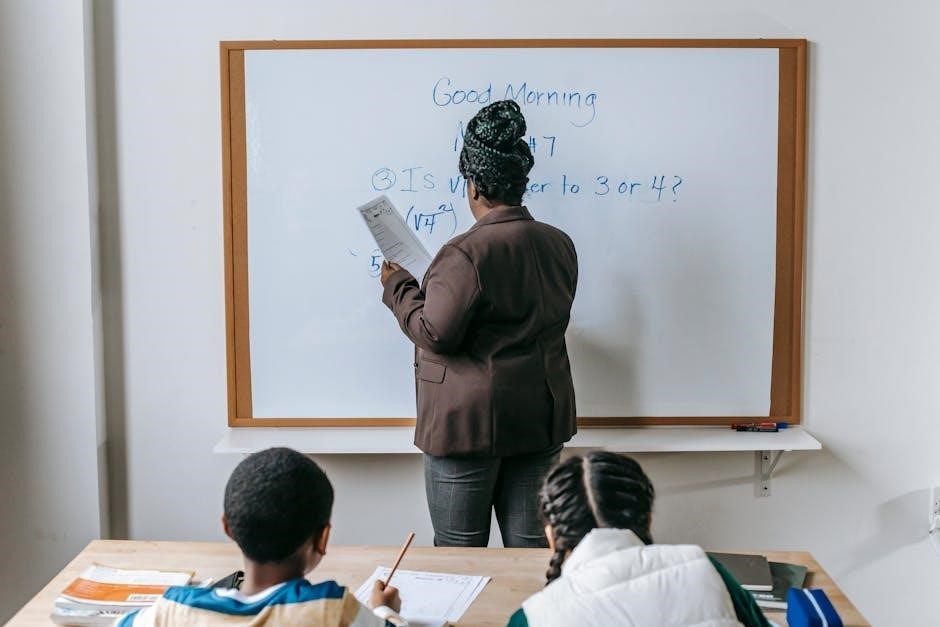
Universal Design for Learning (UDL) offers substantial benefits, fostering a more inclusive and effective learning environment. By proactively addressing learner variability, UDL reduces barriers and maximizes access to education for all students. This framework encourages educators to think beyond “one-size-fits-all” approaches, leading to increased student engagement and motivation.
UDL promotes self-directed learning, empowering students to take ownership of their education by choosing methods that best suit their needs. It also supports a wider range of learning styles and preferences, resulting in improved comprehension and retention.
Furthermore, UDL minimizes the need for costly and time-consuming individualized accommodations, streamlining the learning process for both students and teachers. Ultimately, UDL cultivates a more equitable and supportive classroom where every learner can thrive.
UDL in Practice: Examples in the Classroom
Universal Design for Learning (UDL) translates into practical classroom strategies. Consider a second-grade class learning about farms; instead of a single report format, students could choose to demonstrate understanding through postcards, posters, or even short videos – offering multiple means of expression.
Providing text-to-speech software alongside traditional reading materials exemplifies multiple means of representation, catering to diverse reading abilities. Offering varied levels of scaffolding during assignments, from detailed outlines to minimal guidance, supports action and expression.
Incorporating student choice in project topics and allowing flexible grouping fosters engagement. Utilizing digital tools with customizable features, like adjustable font sizes and color contrasts, further enhances accessibility; These examples demonstrate UDL’s power to create flexible learning experiences.

DI vs. UDL: Key Differences and Similarities
Differentiated Instruction is often reactive, adjusting to individual needs, while Universal Design for Learning is proactive, designing for inclusivity from the outset, though both value flexibility.
Proactive vs. Reactive Approaches
Differentiated Instruction (DI) often functions as a reactive approach. Educators typically assess students’ existing skills and learning preferences after instruction has begun, then modify lessons accordingly. This means adjustments are made in response to observed needs, tailoring content, process, or product for specific learners. While effective, this can be demanding, requiring ongoing assessment and adaptation.
Universal Design for Learning (UDL), conversely, is fundamentally proactive. It emphasizes designing learning experiences from the start to be accessible to the widest range of learners possible. Instead of modifying after the fact, UDL aims to minimize barriers by providing multiple means of representation, action & expression, and engagement. This anticipates diverse needs, reducing the need for individual adjustments.
Essentially, DI responds to learner variability, while UDL designs for learner variability. UDL strives to create inherently flexible learning environments, lessening the burden of constant modification inherent in a purely reactive system.
Focus on Individual vs. Focus on Flexibility
Differentiated Instruction (DI) centers on the individual learner. It acknowledges that students have varying readiness levels, interests, and learning profiles, and seeks to tailor instruction to meet those specific needs. This often involves creating distinct learning paths or assignments for different students, focusing on personalized learning experiences. The emphasis is on addressing individual gaps and maximizing each student’s potential.
Universal Design for Learning (UDL), however, prioritizes flexibility within the learning environment. Rather than focusing on individual differences, UDL aims to provide options that benefit all learners. It’s about creating a robust and adaptable framework where students can choose methods and tools that work best for them, regardless of their specific needs.
UDL doesn’t ignore individual needs, but it addresses them through built-in flexibility, empowering students to self-regulate and customize their learning. It’s a shift from “fixing” individuals to optimizing the learning context.
The Role of Assessment in DI and UDL
Assessment plays a crucial, yet distinct, role in both Differentiated Instruction (DI) and Universal Design for Learning (UDL). In DI, assessment is frequently used diagnostically – to pinpoint a student’s current understanding and identify areas where they need targeted support. This informs the creation of individualized learning plans and adjustments to instruction. Formative assessment is key to monitoring progress and refining differentiation strategies.
UDL views assessment as an integral part of the learning process itself, rather than solely a measure of outcomes. It emphasizes providing multiple means of assessment, allowing students to demonstrate their knowledge in ways that align with their strengths. This could include options like presentations, projects, or traditional tests.
UDL assessments aim to be more authentic and less reliant on a single format, reducing barriers for diverse learners. Both approaches value assessment, but DI uses it to tailor, while UDL uses it to empower.
Can DI and UDL Work Together? A Synergistic Approach
Absolutely! Differentiated Instruction (DI) and Universal Design for Learning (UDL) aren’t mutually exclusive; they can function synergistically to create truly inclusive learning environments. A powerful approach involves leveraging UDL as a foundational framework, designing lessons with flexibility and accessibility built-in from the start.
This proactive UDL base minimizes barriers for most learners. However, even with UDL, some students may still require more individualized support. This is where DI comes in, providing targeted interventions and adjustments for those who need them.
Think of UDL as setting a robust table for everyone, while DI provides a specialized utensil or plate setting for a few. This combined approach maximizes inclusivity and ensures all students have opportunities to thrive, blending proactive design with reactive support.

Implementation Strategies
Start with UDL to establish an inclusive foundation, then integrate Differentiated Instruction for targeted support; technology powerfully enhances both approaches, fostering accessible learning.
Starting with UDL: Building a Foundation for Inclusion
Universal Design for Learning provides a proactive framework, fundamentally reshaping learning experiences for all students from the outset. This approach centers on minimizing barriers and maximizing accessibility, rather than retrofitting lessons for individual needs. By focusing on flexibility in representation, action & expression, and engagement, UDL creates a learning environment where diverse learners can thrive.
Implementing UDL initially involves carefully considering learning goals and then providing multiple means for students to access content, demonstrate understanding, and stay motivated. Think about offering varied formats for materials – audio, video, text – and allowing students choices in how they complete assignments. This foundational shift towards inclusivity benefits every learner, not just those with identified learning differences.
SFU’s diverse student body exemplifies the need for such a framework. Building this base with UDL simplifies the subsequent integration of more individualized strategies, like those found in Differentiated Instruction.
Integrating DI within a UDL Framework
Once a Universal Design for Learning framework is established, Differentiated Instruction can be seamlessly layered on top to address the specific, individual needs of students. UDL provides the flexible infrastructure, while DI offers targeted adjustments. Consider UDL as the architectural design of an accessible building, and DI as the personalized furnishings within each room.
This synergistic approach allows educators to proactively minimize barriers for most learners (UDL) and then strategically respond to those who require additional support or challenge (DI). For example, if UDL provides multiple means of representation, DI might involve adjusting the complexity of the content for a particular student;
Kate Smith’s second-grade class demonstrates this beautifully – UDL created options for sharing learning, and DI allowed students to choose formats aligning with their strengths. This integration avoids the “baggage” sometimes associated with DI, positioning it as a responsive component of a universally designed learning experience.
Technology’s Role in Supporting Both Approaches

Technology plays a pivotal role in facilitating both Universal Design for Learning and Differentiated Instruction, expanding access and personalization possibilities. Digital tools can readily provide multiple means of representation – text-to-speech, adjustable font sizes, and translated materials – aligning with UDL principles. They also empower students with varied action and expression options, like digital storytelling or coding projects.
Furthermore, technology streamlines DI implementation. Learning Management Systems (LMS) allow teachers to easily assign different tasks based on student readiness or interest. Adaptive software adjusts difficulty levels in real-time, providing personalized challenges.
However, it’s crucial to remember that technology is a tool, not a replacement for sound pedagogical practices. Effective integration requires careful planning to ensure accessibility and equitable access for all learners, reflecting SFU’s diverse student body and their varied goals.
Future Trends and Considerations
Inclusive education continues to evolve, with UDL gaining prominence as a proactive framework, while DI adapts to support flexible learning environments for all students.
The Evolution of Inclusive Education
Inclusive education has undergone a significant transformation, shifting from segregated systems to models embracing diversity. Historically, accommodations were often reactive, tailored to individual students after identifying specific learning challenges – a hallmark of early Differentiated Instruction approaches. This involved modifying content, process, or product to meet individual needs.
However, a growing understanding of neurological differences and varying learning styles spurred the development of more proactive frameworks. Universal Design for Learning emerged as a response, advocating for designing learning experiences accessible to all learners from the outset. This represents a paradigm shift, moving away from “fixing” students to creating flexible environments.
The current trajectory emphasizes a synergistic blend of both approaches. Educators are increasingly recognizing that a UDL foundation – providing multiple means of representation, action & expression, and engagement – can be powerfully complemented by targeted DI strategies for students requiring more individualized support. This evolution reflects a commitment to equitable access and maximizing learning potential for every student.
UDL and the Changing Landscape of Learning
Universal Design for Learning is increasingly relevant as the learning landscape evolves, driven by technological advancements and a more diverse student population. The rise of online learning, exemplified by Zoom classes, necessitates designs accommodating varied access, abilities, and learning preferences – core tenets of UDL.
Traditional, one-size-fits-all instruction struggles in this dynamic environment. UDL’s emphasis on flexibility – offering multiple means of representation, action & expression, and engagement – aligns perfectly with personalized learning pathways facilitated by technology. This contrasts with solely relying on Differentiated Instruction, which can be resource-intensive and potentially reactive.
Furthermore, UDL promotes self-directed learning and empowers students to become active participants in their education. As learning extends beyond the classroom, preparing students for a rapidly changing world demands fostering adaptability and problem-solving skills, which UDL inherently supports. The future of education hinges on proactively designing for inclusivity, making UDL a foundational principle.