
Manual gearbox oil is a specialized lubricant crucial for smooth operation and longevity of transmission systems. It differs significantly from engine oil, possessing a higher viscosity designed for extreme pressures.
What is Manual Gearbox Oil?
Manual gearbox oil, also known as transmission oil or gear oil, is a lubricant specifically formulated for the demanding conditions within manual transmissions. Unlike engine oil, which primarily focuses on lubricating internal combustion engine parts, gearbox oil’s primary function is to protect the gears and other components within the gearbox.
It’s a highly viscous fluid designed to withstand the extreme pressures generated during gear meshing. This viscosity is crucial as manual gearboxes typically lack an oil pump, relying on the oil’s inherent thickness to coat and protect surfaces. The oil cushions impacts, reduces friction, and dissipates heat, preventing wear and ensuring efficient power transfer. Different formulations exist, ranging from mineral-based to fully synthetic, each offering varying levels of performance and protection.
The Importance of Using the Correct Oil
Using the correct manual gearbox oil is paramount for maintaining the health and extending the lifespan of your transmission. Incorrect oil can lead to premature wear and tear on gears, resulting in costly repairs or even complete gearbox failure. The high pressures within a gearbox demand a lubricant specifically engineered to handle those stresses.

Employing an oil with insufficient viscosity can cause metal-to-metal contact, accelerating wear. Conversely, overly viscous oil may hinder smooth shifting, especially in colder temperatures. Furthermore, using an oil not meeting the manufacturer’s specifications can void warranties. Always consult your vehicle’s owner’s manual to determine the appropriate oil type and viscosity grade for optimal performance and protection.

Understanding Gear Oil Viscosity
Gear oil viscosity, measured by SAE grades like 75W-90 and 80W-140, dictates its flow characteristics at varying temperatures, impacting lubrication effectiveness.
SAE Viscosity Grades Explained (e.g., 75W-90, 80W-140)
SAE viscosity grades, such as 75W-90 or 80W-140, are critical for selecting the correct gear oil. The first number, preceded by a “W” (Winter), indicates cold-weather viscosity. Lower numbers signify better flow in cold temperatures, aiding easier shifting when the engine is cold. The second number represents viscosity at 100°C (212°F), indicating the oil’s thickness under normal operating conditions.
For example, 75W-90 oil flows like an SAE 75 oil at low temperatures and behaves like an SAE 90 oil at high temperatures. Conversely, 80W-140 offers higher viscosity for heavier-duty applications and warmer climates. Choosing the appropriate grade ensures optimal lubrication and protection across a wide temperature range, preventing wear and maximizing gearbox efficiency.
The “W” Rating and Cold-Weather Performance
The “W” rating in gear oil viscosity grades (e.g., 75W-90) signifies winter performance, indicating the oil’s ability to flow at low temperatures. A lower number preceding the “W” denotes superior cold-weather fluidity. This is vital because gearbox oil, unlike engine oil, doesn’t benefit from engine heat to reduce viscosity quickly during startup.
Gearboxes lacking an oil pump rely on viscosity for lubrication, making cold-flow properties crucial. Oils with a higher “W” rating become thick and sluggish in cold conditions, hindering shifting and potentially causing wear. Selecting an oil with an appropriate “W” rating for your climate ensures adequate lubrication and protects the gearbox from damage during cold starts and operation.
Viscosity Comparison to Engine Oil (SAE 60 vs. SAE 90)
While both engine and gearbox oils utilize the SAE viscosity grading system, their applications demand significantly different properties. An SAE 60 motor oil exhibits a viscosity roughly comparable to an SAE 90 gear oil, alongside an AGMA 6 gear lubricant and an ISO viscosity grade 320. However, this comparison is a simplification.
Gearboxes endure far greater shock loads and pressures than engines, necessitating the higher viscosity of gear oils. Engine oils prioritize fluidity for efficient engine operation, while gear oils prioritize film strength to prevent metal-to-metal contact. Therefore, substituting engine oil for gearbox oil is strongly discouraged, as it will lead to premature wear and potential gearbox failure.

Types of Manual Gearbox Oil
Manual gearbox oils are categorized into mineral, semi-synthetic, and full synthetic formulations, each offering varying levels of performance and protection for your transmission.
Mineral Gear Oils
Mineral gear oils represent the traditional base for manual transmissions, refined from crude oil. They are generally the most affordable option, suitable for older vehicles or those with less demanding gearboxes. However, they offer comparatively less resistance to breakdown under high stress and temperature fluctuations.
These oils typically lack the advanced additive packages found in synthetic alternatives, meaning they may not provide the same level of wear protection or extended drain intervals. Mineral oils are prone to oxidation, forming sludge and deposits over time, potentially impacting gearbox performance. While adequate for basic lubrication, they may not be ideal for modern, high-performance vehicles or those subjected to severe driving conditions like towing or racing. Regular oil changes are crucial when using mineral gear oils to maintain optimal gearbox health.
Synthetic Gear Oils
Synthetic gear oils are engineered for superior performance and durability, created through complex chemical processes. They excel in extreme temperatures, maintaining viscosity and lubrication under both intense heat and frigid cold. This results in smoother shifting, reduced friction, and enhanced wear protection for gearbox components.
Compared to mineral oils, synthetics offer significantly improved oxidation stability, resisting breakdown and sludge formation for extended periods. They often include advanced additive packages that further enhance performance, such as friction modifiers and extreme pressure agents. While typically more expensive upfront, synthetic gear oils can save money in the long run through longer drain intervals and reduced gearbox wear. They are the preferred choice for modern, high-performance vehicles and demanding applications.
Semi-Synthetic Gear Oils
Semi-synthetic gear oils represent a blend of mineral and synthetic base oils, offering a compromise between cost and performance. They provide enhanced properties compared to traditional mineral oils, such as improved thermal stability and oxidation resistance, but don’t quite match the full capabilities of a fully synthetic formulation.
These oils are a good option for vehicles with moderate demands or those seeking an upgrade from mineral oil without the higher price tag of a full synthetic. They generally offer better cold-flow properties than mineral oils, aiding in easier shifting in colder climates. Semi-synthetics still benefit from additive packages designed to protect gears and reduce friction, extending gearbox life and improving efficiency. They strike a balance, making them a versatile choice for many manual transmissions.

Gear Oil Specifications and Standards
Gear oil standards, like those from AGMA and ISO, define quality and viscosity. GL-4 and GL-5 ratings indicate additive levels for gear protection and compatibility.

AGMA (American Gear Manufacturers Association) Standards
AGMA standards are pivotal in classifying industrial gear oils, providing a framework for lubricant selection based on gear type and operating conditions. These standards categorize oils numerically, with higher numbers indicating increased load-carrying capacity. For instance, an AGMA 6 gear lubricant exhibits viscosity comparable to SAE 90 gear oil.
AGMA classifications focus on the oil’s ability to withstand extreme pressures and prevent wear within gear meshes. They don’t directly specify viscosity grades but correlate with them. Understanding AGMA ratings helps ensure optimal gearbox performance and extends component life by matching the lubricant’s properties to the specific demands of the application. Proper AGMA-classified oil minimizes friction and heat generation.
ISO (International Organization for Standardization) Viscosity Grades
ISO viscosity grades offer a globally recognized system for classifying gear oil thickness, complementing the SAE standards; These grades, denoted as ISO VG numbers (e.g., ISO VG 320, ISO VG 460), represent the oil’s kinematic viscosity at a specific temperature – typically 40°C. An ISO VG grade correlates with an approximate SAE equivalent, aiding in lubricant selection.
Higher ISO VG numbers signify greater viscosity and, consequently, increased load-carrying capacity. For manual gearboxes, selecting the appropriate ISO grade is crucial for ensuring adequate lubrication under varying speeds and loads. This standardization facilitates consistent performance and interchangeability across different manufacturers and regions, promoting optimal gearbox efficiency and durability.
GL-4 vs. GL-5 Gear Oils: What’s the Difference?

GL-4 and GL-5 are API (American Petroleum Institute) service classifications defining gear oil performance levels. GL-4 oils are designed for older transmissions, particularly those with bronze or yellow metal components, offering moderate extreme pressure (EP) protection. They lack the high levels of additives found in GL-5, preventing corrosion of these softer metals.
GL-5 oils provide superior EP performance, suitable for hypoid gears commonly found in modern differentials and gearboxes. However, their aggressive additives can corrode bronze/yellow metals. Using GL-5 in a GL-4 specified gearbox is generally not recommended. Always consult your vehicle’s manual to determine the correct specification, ensuring optimal protection and preventing potential damage.

Changing Manual Gearbox Oil
Regular oil changes are vital for maintaining gearbox health. This process involves draining old fluid, replacing seals if needed, and refilling with the correct grade of oil.
Recommended Oil Change Intervals
Determining the ideal oil change interval for your manual gearbox depends heavily on driving conditions and vehicle manufacturer recommendations. Generally, a change every 30,000 to 60,000 miles (48,000 to 96,000 kilometers) is a good starting point for normal driving.
However, if you frequently engage in demanding activities like towing, off-roading, or aggressive driving, shortening this interval to 15,000 to 30,000 miles (24,000 to 48,000 kilometers) is advisable. Always consult your vehicle’s owner’s manual for specific guidance, as manufacturers often provide tailored recommendations based on the gearbox design and intended use. Ignoring these intervals can lead to premature wear and potential transmission failure.
Tools and Materials Needed for an Oil Change
Successfully changing your manual gearbox oil requires gathering specific tools and materials. Essential items include a wrench or socket set to remove the drain and fill plugs, a drain pan to catch the old oil, and a funnel for pouring in the new lubricant;
You’ll also need the correct type and quantity of gear oil, as specified in your vehicle’s owner’s manual. Gloves and safety glasses are crucial for protection, alongside rags for cleanup. A torque wrench ensures proper tightening of the plugs, preventing leaks. Depending on the vehicle, a pump may be needed to inject oil into the fill hole. Finally, dispose of the used oil responsibly at a recycling center.
Step-by-Step Guide to Changing Gearbox Oil
Begin by warming up the gearbox slightly for better oil flow. Locate the drain and fill plugs on the gearbox. Position the drain pan beneath the drain plug, then carefully remove it, allowing the old oil to drain completely. Once drained, clean the drain plug and reinstall it with a new crush washer, torquing to specification.
Next, locate the fill plug and remove it. Using a funnel, slowly pour in the new gear oil until it reaches the fill level – often indicated by oil beginning to seep from the fill hole. Reinstall the fill plug, again torquing to specification. Finally, verify no leaks and check the oil level again after a short test drive.

Potential Problems with Incorrect Oil
Using the wrong gearbox oil leads to increased wear, shifting difficulties, and noticeable noise or vibrations within the transmission system, causing potential damage.
Increased Wear and Tear on Gears
Incorrect gear oil viscosity dramatically accelerates wear on the gearbox’s internal components, particularly the gears themselves. Manual transmissions operate under substantial loads and require a robust lubricant film to prevent metal-to-metal contact. If the oil is too thin, it fails to maintain adequate separation, leading to scuffing, pitting, and ultimately, gear failure.
Conversely, excessively thick oil can also be detrimental, hindering proper lubrication at lower temperatures and increasing internal friction. This heightened friction generates excessive heat, further contributing to material breakdown and accelerated wear. Regular oil changes with the manufacturer-recommended specification are vital for mitigating these risks and preserving the longevity of the gearbox.
Difficulty Shifting Gears
Using the wrong gear oil frequently manifests as difficulty selecting gears, especially when the gearbox is cold. Incorrect viscosity impacts the synchronizers’ ability to smoothly mesh gears during shifts. Thin oil lacks the necessary pressure to facilitate clean engagement, resulting in grinding or a reluctance to move into the desired gear.
Conversely, overly thick oil creates excessive drag, making it harder to physically move the shift lever and increasing the force needed for each gear change. This can lead to driver fatigue and potentially damage the shift mechanism over time. Maintaining the correct oil specification ensures optimal synchronizer function and effortless gear selection across all operating conditions.
Noise and Vibration
Degraded or incorrect gear oil often leads to noticeable increases in gearbox noise and vibration. Insufficient lubrication causes metal-to-metal contact between gears, resulting in whining, clunking, or rumbling sounds, particularly during acceleration or deceleration. These noises indicate accelerated wear and potential damage to the gearbox components.
Vibrations can also stem from inadequate oil film thickness, as the gears aren’t properly cushioned. This impacts driving comfort and signals a critical need for attention. Using the specified oil type and maintaining regular oil change intervals are vital for minimizing friction, dampening noise, and ensuring a quiet, smooth driving experience. Ignoring these symptoms can lead to costly repairs.
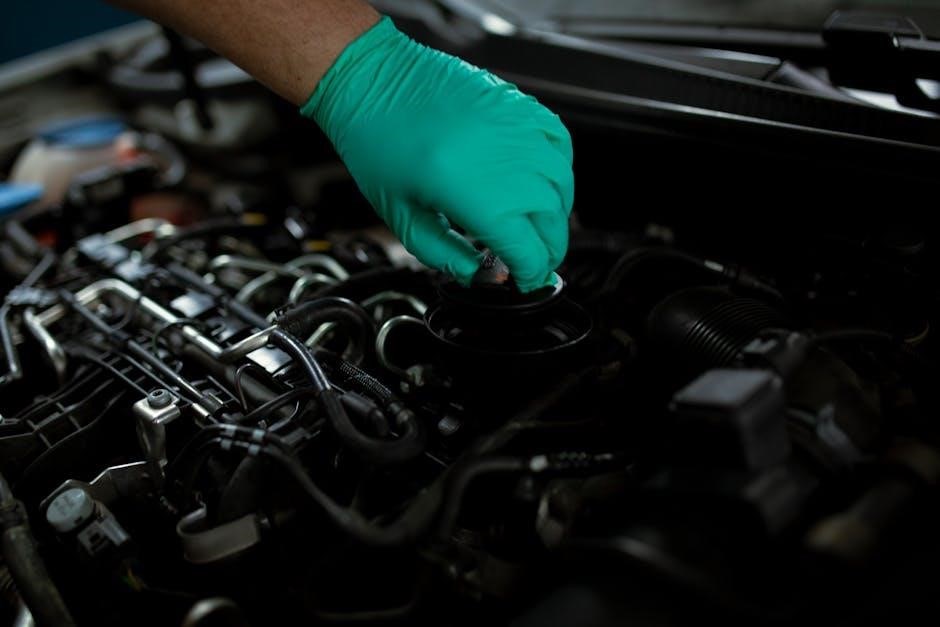
Specific Oil Recommendations (Examples)
Penrite Pro Gear GL-5 75W-85 stands out as a premium, fully synthetic option optimized for differentials and transaxles requiring specific performance characteristics.
Penrite Pro Gear GL-5 75W-85
Penrite Pro Gear GL-5 75W-85 is a top-tier, fully synthetic gear oil meticulously engineered to excel in both differentials and transaxles. This formulation specifically targets applications demanding superior performance and protection. Its advanced synthetic base oils provide exceptional thermal stability, resisting breakdown even under intense operating temperatures and heavy loads.
The 75W-85 viscosity grade ensures optimal lubrication across a broad temperature range, facilitating smooth shifting and reducing wear. It’s designed to meet or exceed the stringent requirements of modern gearbox designs, offering enhanced gear protection and extended component life. Penrite Pro Gear GL-5 75W-85 delivers excellent anti-foam and anti-wear properties, contributing to reliable and efficient drivetrain operation. This oil is a strong choice for enthusiasts and demanding applications.
Other Popular Gear Oil Brands
Beyond Penrite, several reputable brands offer high-quality manual gearbox oils catering to diverse needs and budgets. Motul is widely recognized for its racing-derived synthetic gear oils, providing exceptional performance in demanding conditions. Red Line is another prominent choice, known for its ester-based formulations that enhance lubricity and reduce friction.
Valvoline offers a comprehensive range, including both conventional and synthetic options, suitable for various vehicle types. Castrol provides dependable gear oils with proven track records, often meeting or exceeding OEM specifications. Mobil 1 also features synthetic gear oils designed for extended drain intervals and superior protection. Selecting the best brand depends on specific vehicle requirements and driving style, but these represent consistently reliable options.